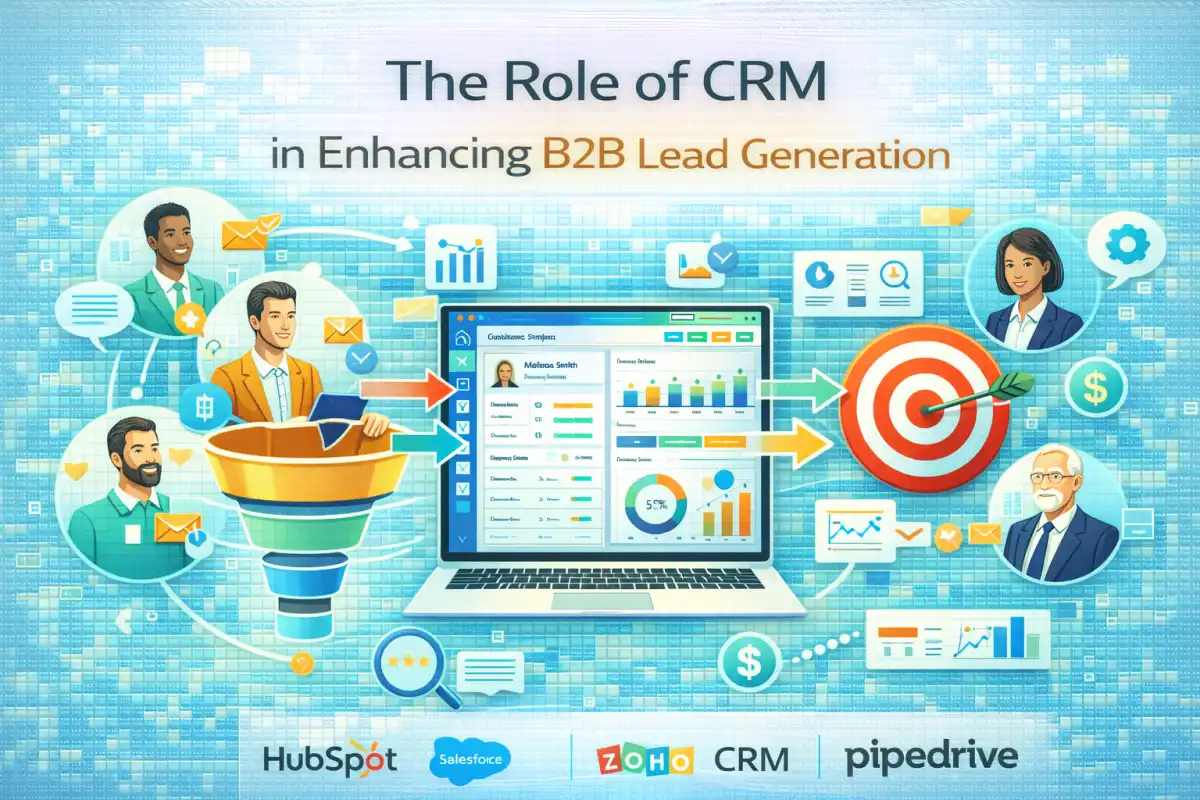
The Role of CRM in Enhancing B2B Lead Generation
In the world of business-to-business (B2B) marketing, generating quality leads is essential for growth. Companies constantly seek effective methods to attract potential clients. Customer Relationship Management (CRM) systems have become vital tools in this endeavor. They streamline processes, improve communication, and ultimately enhance lead generation efforts.
Why B2B Lead Generation Needs a CRM
Generating leads in a B2B environment involves more than just finding contacts. It requires a systematic approach to manage relationships and track interactions. A CRM provides a centralized platform where all customer data is stored. This organization helps businesses identify patterns and preferences among leads.
Without a CRM, companies may struggle with scattered information. This can lead to missed opportunities and inefficient communication. A robust CRM system ensures that every team member has access to the same data, promoting collaboration and informed decision-making. It creates a coherent strategy for engaging potential clients at every stage of their journey.
Key CRM Features for B2B Lead Generation
Several features within a CRM are particularly beneficial for B2B lead generation. First, lead tracking allows businesses to monitor interactions with prospects. This feature makes it easier to see which leads are most engaged. It helps teams prioritize their outreach efforts effectively.
Another important feature is segmentation. A CRM can categorize leads based on various criteria such as industry, company size, or engagement level. This targeted approach allows for personalized messaging, increasing the chances of conversion. Additionally, reporting and analytics tools provide insights into lead behavior and campaign performance, enabling businesses to refine their strategies continuously.
How CRM Improves Lead Nurturing
Lead nurturing is crucial in B2B marketing. It involves building relationships with potential clients over time. A CRM provides tools to automate follow-ups and reminders. This ensures that no lead is forgotten and that every opportunity is explored.
Moreover, personalized communication is essential in nurturing leads. With a CRM, businesses can tailor their messages based on previous interactions. This level of customization fosters trust and demonstrates a genuine interest in the lead's needs. Effective nurturing can significantly increase the likelihood of converting leads into long-term clients.
Implementing CRM for B2B Lead Generation
Implementing a CRM system requires careful planning. First, businesses must define their goals and determine what they hope to achieve with the CRM. This could include improving lead tracking, enhancing customer engagement, or streamlining sales processes.
Next, it is essential to train the team on how to use the CRM effectively. This training should cover all features relevant to lead generation. Regular updates and feedback sessions can help keep the system aligned with evolving business needs. Additionally, integrating the CRM with existing software tools can enhance its overall effectiveness.
Top CRM Trends for B2B Lead Generation in 2026
As we look ahead, several trends in CRM technology are shaping the future of B2B lead generation. One notable trend is the integration of artificial intelligence (AI) and machine learning. These technologies can analyze large datasets to predict lead behavior, helping businesses focus their efforts more effectively.
Another trend is the increasing importance of mobile CRM solutions. With more professionals working remotely, accessing CRM systems on mobile devices has become essential. This flexibility allows sales teams to engage with leads anytime, anywhere, enhancing responsiveness.
Benefits of Using CRM for B2B Lead Generation
Utilizing a CRM for lead generation comes with numerous advantages. First, it enhances efficiency. By automating repetitive tasks, sales teams can focus on building relationships rather than administrative duties. This leads to higher productivity and more meaningful interactions with leads.
Furthermore, a CRM provides valuable insights into customer behavior. By analyzing data, businesses can refine their marketing strategies and identify the most effective channels for reaching potential clients. This data-driven approach increases the chances of successful conversions and long-term relationships.
Conclusion
In conclusion, a CRM is an indispensable tool for B2B lead generation. It streamlines processes, improves communication, and enables personalized engagement with potential clients. By embracing CRM technology, businesses can enhance their lead generation efforts and drive sustainable growth.
FAQs
1. Can a CRM replace marketing automation tools?
A CRM can complement marketing automation tools but does not necessarily replace them. Both serve different functions and can work together for better results.
2. How does CRM scoring improve B2B lead conversion?
CRM scoring helps prioritize leads based on their engagement level and likelihood to convert. This targeted approach allows sales teams to focus on the most promising leads.
3. Is a CRM suitable for small B2B startups?
Yes, a CRM can be beneficial for small B2B startups. It helps organize customer data and manage relationships right from the beginning, setting a strong foundation for growth.
4. Can CRMs integrate with social media platforms?
Many CRMs offer integrations with social media platforms, allowing businesses to track interactions and engage with leads directly through these channels.
5. How does AI help in B2B lead generation CRMs?
AI enhances B2B lead generation CRMs by providing insights into lead behavior, automating tasks, and predicting which leads are most likely to convert, thus improving overall efficiency.